
Descript's free plan gives you 60 media minutes per month, 100 AI credits that do not renew, 720p watermarked exports, and 5GB of storage. That covers a single short recording session and enough feature access to evaluate whether the tool fits your workflow. It runs out quickly for anyone producing content on a regular schedule.
The detail most users miss: the 100 AI credits on the free plan are a one-time allocation. They never reset. Once you have used them on Studio Sound noise removal, filler word detection, Underlord edits, or Overdub voice synthesis, you need to upgrade to get more. The full Descript pricing breakdown covers what each paid plan costs — this post focuses specifically on where the free plan hits its limits.
The 60-minute monthly media allowance
Sixty media minutes per month is the free plan's main ceiling. Every minute of video or audio you upload counts against this limit. A 30-minute podcast interview plus a 30-minute product walkthrough fills the allowance before you have edited anything.
The count triggers at upload, not export. If you import a 45-minute recording, edit it for an hour, and then delete the project, those 45 minutes are already counted. You cannot reclaim them within the same calendar month.
Media minutes reset on the first day of each month and do not roll over. Uploading 20 minutes in the last week of July does not give you 80 minutes in August — the counter returns to zero.
Paid plans give substantial headroom: Descript Hobbyist includes 600 minutes (10 hours), Creator includes 1,800 minutes (30 hours), and Business includes 2,400 minutes (40 hours) per month. For a solo podcaster producing three hour-long episodes monthly, Hobbyist is the practical minimum — the free plan runs out after the first episode.
The free plan also includes 2 hours of remote recording per month via Descript Rooms, with up to 10 participants. That covers a single interview session but leaves no room for re-recording on the same month.

The 100 AI credits that do not come back
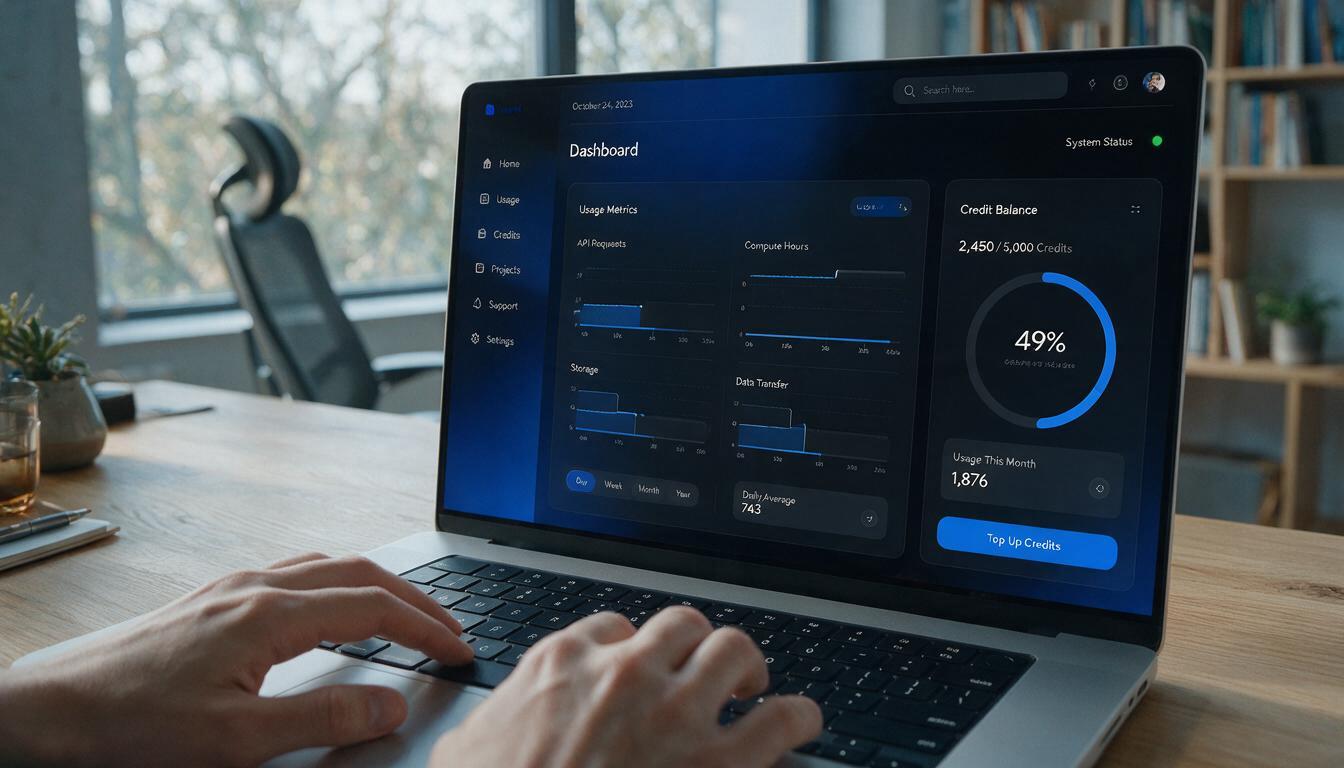
The free plan comes with 100 AI credits — not per month, but as a single one-time allocation that never refills. This is the limit most users discover mid-project without expecting it.
AI credits are the currency for every AI-powered feature in Descript. Underlord, the AI co-editor, consumes credits when you generate a title, restructure a script, create social clips, or write show notes. Studio Sound costs credits per minute of noise removal applied. Eye Contact correction costs credits per minute of video processed. Filler word removal and Overdub voice synthesis also draw from the same pool.
100 credits disappear faster than expected if you test multiple features on a single project. Run Studio Sound on a 30-minute recording, remove filler words from the same file, and ask Underlord to generate a summary — three operations on one project can consume a significant share of the allocation.
On paid plans, AI credits reset monthly: Hobbyist gets 400, Creator gets 800, and Business gets 1,500. All paid plans also allow purchasing additional credits beyond the monthly allowance. The free plan has no top-up option. Descript's help center documents which specific actions consume credits and at what rate.
Export quality, watermarks, and storage
The 720p export cap is the most visible restriction on the free plan. For personal archiving, 720p is acceptable. For YouTube, the compression at upload makes 720p noticeably softer than 1080p on a standard monitor. For content delivered to a client or published on a professional channel, the resolution cap is a real constraint.
Every free plan export carries a Descript watermark in the bottom-right corner. There is no option to remove it at the free tier. Hobbyist at $16 per month is the entry point for watermark-free output at 1080p.
Web link exports — shareable video pages hosted on Descript's servers — cap at one hour in duration on both the free and Hobbyist plans. Creator and Business extend this to three hours, which matters for webinars, course recordings, and long-form interviews.
Cloud storage on the free plan is 5GB. A single hour of 1080p source footage typically runs 3–6GB, which means the storage limit can become binding before the media minutes do for users who upload high-resolution files.
Free vs paid plans: the full breakdown

The gap between free and Hobbyist is large relative to the $16 per month cost. Watermarks disappear, resolution increases to 1080p, media minutes jump from 60 to 600, AI credits become a monthly 400-unit allowance instead of a one-time 100-unit pool, and storage expands from 5GB to 100GB. Creator at $24 per month adds 4K output, 1,800 monthly media minutes, and 800 AI credits for heavier production schedules.
Descript publishes current plan details at descript.com/pricing.
| Plan | Annual price | Media minutes | AI credits | Max resolution | Storage |
|---|---|---|---|---|---|
| Free | $0 | 60/month | 100 one-time | 720p + watermark | 5GB |
| Hobbyist | $16/mo | 600/month | 400/month | 1080p | 100GB |
| Creator | $24/mo | 1,800/month | 800/month | 4K | 1TB |
| Business | $50/mo | 2,400/month | 1,500/month | 4K | 2TB |
What the free plan is actually good for
The free plan works well in three situations: evaluating the editor before committing to a paid plan, editing one short video per month that you do not intend to publish professionally, and doing light transcription on recordings you will process elsewhere.
For evaluation, 60 media minutes is enough to experience the full editing workflow — import a file, watch it transcribe, cut by deleting text, run Studio Sound, and try Underlord. You will use AI credits in the process, but you get a genuine preview of how the product works.
For light personal use — a monthly recording shared privately with a small group — the free tier covers the need if you tolerate 720p and a visible watermark.
The free plan does not work for teams (one seat, view-only sharing for collaborators), recurring production schedules (60 minutes runs out in a single episode), or workflows that depend heavily on AI features (100 one-time credits is not enough for regular use). If transcription is the primary need and you are deciding whether Descript is worth paying for, the best AI transcription tools guide covers cheaper dedicated alternatives.
When Hobbyist at $16 per month is the right call
Upgrade when any of the following apply: your monthly media use regularly exceeds 60 minutes, you need watermark-free exports, or your one-time 100 AI credits have run out and you want a monthly allocation.
Hobbyist at $16 per month covers most solo creators producing content on a regular schedule. 600 media minutes per month handles a weekly podcast with room to spare. The 400 monthly AI credits reset so you have a predictable budget for Studio Sound, filler word removal, and Underlord each month. The free-to-Hobbyist step is the largest value gap in Descript's plan structure at this price point.
Creator at $24 per month makes sense when you need 4K output or are processing several hour-long recordings per week alongside heavier AI editing. Business at $50 per month is a team plan — as a solo creator, the per-seat pricing and team-specific features such as Brand Studio and video dubbing are rarely worth the cost.
If your primary need is transcription — converting recordings to text and moving on — Otter.ai handles that at $8.33 per month on its Pro plan, which costs less than Descript Hobbyist for a narrower use case. For creators deciding between Descript and a traditional video editor, the Descript vs CapCut comparison covers the trade-offs in more detail.

Ready to try Descript?
Free plan (1 hour transcription/month). Creator at $24/month. Business at $40/user/month.
Frequently Asked Questions
Continue reading



July 20, 2026