

AI website builders have changed significantly in the past two years. The best ones now generate real, functional applications — not just visual mockups. This guide explains the differences and helps you pick the right one for your project.
Lovable — best for building real apps
Lovable is the best AI website builder for projects that need to actually work — handle user accounts, store and retrieve data, run business logic across multiple pages. You describe what you want in plain English, Lovable generates a full React application, and deploys it to a live URL within two to three minutes. The critical differentiator is its native Supabase integration: when you say "add user accounts" or "let users save their preferences", Lovable sets up a real PostgreSQL database, authentication policies, and storage — not a workaround or local browser storage, but a production-ready backend at supabase.com.
The code Lovable generates is standard React you can export and hand to a developer at any point. You are not locked into Lovable's platform — the output is portable. Free plan gives 5 credits, enough to build one small prototype and validate whether Lovable can generate what you have in mind. The Starter plan at $20/month is the practical option for active building — our is Lovable worth it breakdown covers what those credits buy in practice and where the costs climb. Current credit limits and plan details are at lovable.dev/pricing.
Lovable is not suited to marketing websites or blogs. For content-focused sites with no real user interactions, traditional builders — Webflow, Squarespace, Framer — are faster to set up and easier to maintain. Lovable earns its place when the site needs to do something meaningful with user data. A community forum, a job board, a SaaS dashboard, a booking tool — these are the project types where Lovable's full-stack generation saves weeks of work. A portfolio site, a blog, or a restaurant menu page does not need Lovable; a traditional builder gets you there with less complexity and lower ongoing cost.
| Builder | Best for | Free plan | Paid plan | Backend support |
|---|---|---|---|---|
| Lovable | Functional web apps with databases | 5 credits | $20/mo | Yes — native Supabase integration |
| Bolt | Quick prototypes and live demos | Yes (daily credits) | $20/mo | No (frontend only) |
| Webflow | Marketing sites with visual precision | Yes (limited) | $14/mo | CMS only |
| Framer | Interactive modern marketing sites | Yes (limited) | $5/mo | CMS only |
| Squarespace | Portfolios and small business sites | No (14-day trial) | $16/mo | Basic e-commerce only |



Bolt — best for quick prototypes
Bolt (bolt.new) by StackBlitz runs entirely in your browser. There is no installation, no local setup, and no deployment step separate from the build process — a live preview appears as you build and you can share that URL immediately. This is the fastest way to turn an idea into something a client or investor can interact with. Supported frameworks include React, Next.js, Vue, Svelte, and Astro, which covers the front-end stack most web projects use in 2026.
Bolt's practical advantage is speed. For a landing page, a calculator tool, or an interactive portfolio piece, you can go from blank screen to working prototype in under an hour without any configuration. The generated code is readable and maintainable — real framework code, not a proprietary format — so a developer can pick it up later if you need to extend it.
The significant limitation is backend support. Bolt does not have Lovable's Supabase integration. Any project that needs user accounts, a database, or data that persists between sessions requires manual backend work after Bolt generates the frontend. For prototypes and demos where data can be static or simulated, that limitation does not matter. For anything you intend to launch publicly with real users, it does. The full technical documentation for Bolt's browser-based execution engine is at developer.stackblitz.com.
Bolt's free plan gives daily credits that reset each day — useful for spreading experimentation over a week before committing. The paid plans start at $20/month with a higher monthly credit allocation. For a beginner building their first prototype, the daily free credits are enough to get something working and learn how AI builders interpret plain English instructions before deciding whether to pay. If you expect the prototype to live on — with a database and deployment attached — the Bolt vs Replit comparison covers the tool built for that next step.

When to use a traditional website builder instead
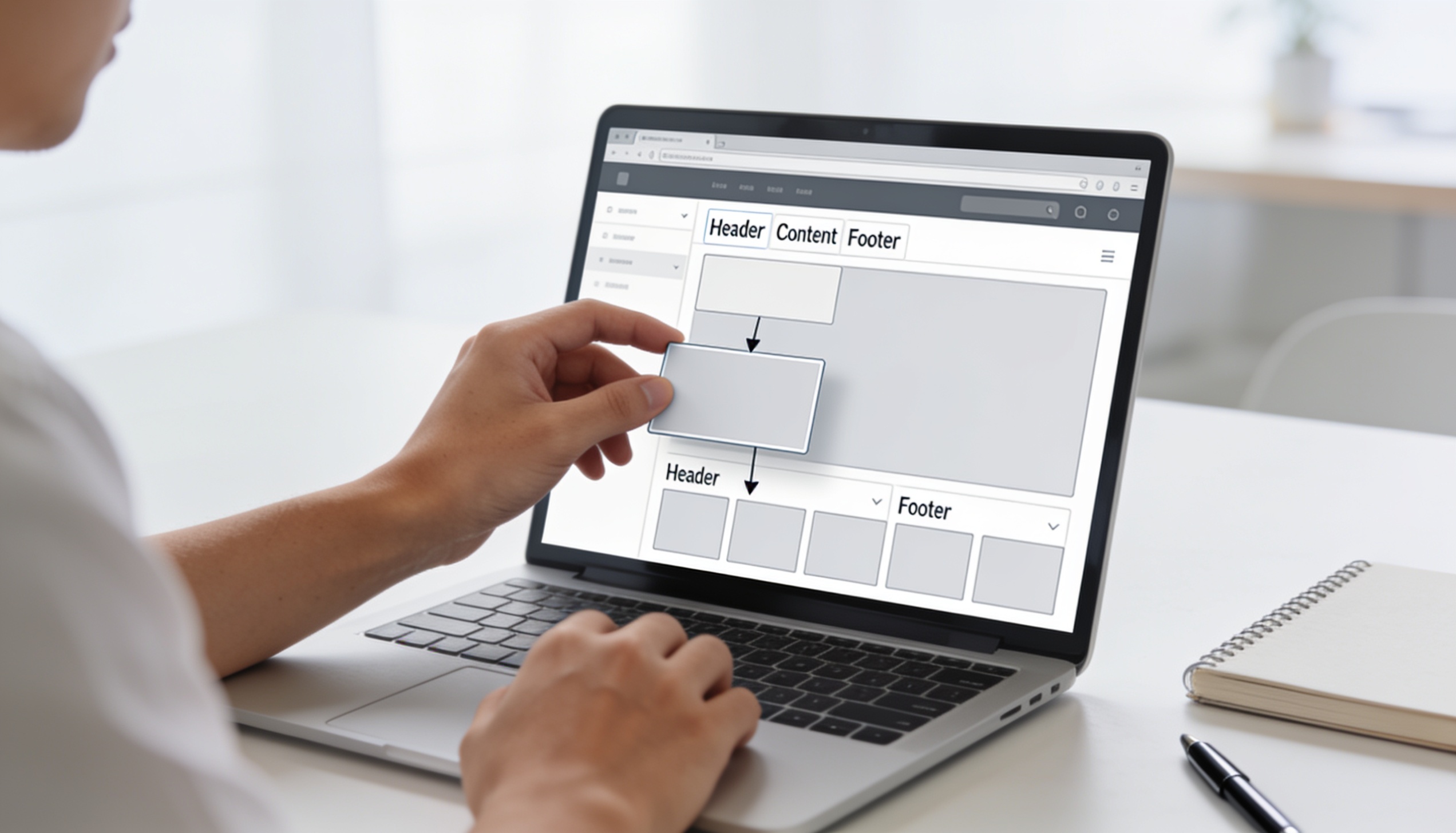
If you need a marketing website, blog, or portfolio — and not a functional web application — traditional builders like Webflow, Squarespace, or Framer are still more reliable for content-focused sites. The reasons are practical: traditional builders have mature CMS support for managing many pages, polished templates designed for content presentation, built-in SEO controls, and long track records of uptime.
Webflow is the strongest choice when visual design precision matters. It lets you build to a specific design rather than filling templates, which is why most professional designers who produce marketing sites use it. The learning curve is steeper than Squarespace, but the output is more custom. Framer is the fastest for modern marketing sites with animations and interactive elements — it targets designers who want something between Webflow's complexity and Squarespace's limitations.
Squarespace is the right choice for small businesses needing a professional-looking site maintained by someone non-technical. It has the strongest e-commerce features of the three, better customer support, and the lowest ongoing complexity. For a restaurant, a photographer, or a local service business, Squarespace covers all the bases without requiring design or technical knowledge.
The general test: if your site needs users to create accounts or your primary goal is a database-backed application, use Lovable. If your site primarily publishes content for visitors to read, a traditional builder handles it better and costs less to maintain long-term.
Who AI website builders are not for
AI website builders save the most time when the goal is a functional web application built without a development team. They are not the right tool in every situation.
Do not use Lovable or Bolt for e-commerce. Integrating payment processing, inventory management, order fulfillment, and tax logic adds complexity that current AI builders handle inconsistently. A Shopify store with a well-chosen theme launches faster, costs less to maintain, and comes with payment processing already handled. For anyone selling products online, Shopify is the right starting point.
Do not use AI builders for sites where SEO and content management are the primary requirements. A blog that publishes ten articles per week, a news site, or a content-driven affiliate site needs a CMS built for that purpose — WordPress, Ghost, or Webflow CMS. AI builders generate application code, not content management infrastructure. You can build a site that displays content, but adding, editing, and scheduling content from a dashboard is not what these tools are designed for.
Do not use AI builders when the project requires guaranteed browser compatibility, accessibility compliance, or specific performance benchmarks. The generated code runs correctly for the typical case, but verifying it meets WCAG 2.1 AA standards or performs within a specific Core Web Vitals budget requires manual review. Developers handling production work for regulated industries or accessibility-sensitive contexts should review the generated output before deploying.
Do not use AI builders as a replacement for understanding what you want to build. The tools are very good at executing clear requirements and very bad at producing something useful when the requirements are vague. "Build me something that makes money" produces nothing. "Build a landing page with an email capture form that saves to a database" produces something working in under ten minutes. The clearer your description, the better the output.
Ready to try Lovable?
Free plan (5 messages/day). Starter at $25/month. Pro at $50/month.
Frequently Asked Questions
Continue reading



June 27, 2026