

The AI video editor category split in two in 2026. Half the tools on every list are traditional editors — Premiere Pro, DaVinci Resolve — that added AI features to software working editors already know. The other half are AI-native editors: Descript, CapCut, Runway. Built around AI as the primary interface rather than a feature layer on top of an existing timeline.
Three tools cover most creators: Descript for talking-head and podcast editing, CapCut for short-form social content, and Runway when you want AI to generate video you never filmed. Professional editors in Adobe or Blackmagic ecosystems do not need to switch — both tools have caught up on AI features in the last 12 months.
How the AI video editing category split in 2026
The split matters because the marketing does not make it clear. "AI video editing" describes two different workflows that share a phrase.
The first: AI assistance inside a traditional editor. A professional editor loads footage into Premiere Pro or DaVinci Resolve. AI handles the tedious parts — removing background noise, detecting scene cuts automatically, reframing a wide shot for vertical export. The editor stays in control of the timeline; AI makes individual steps faster.
The second: AI as the primary editing interface. A creator loads a video or types a script, and the AI handles structure, captions, cuts, and in some cases generates video content from text. Descript, CapCut, and Runway are built around this model.
A 5-minute talking-head edit that took 4 to 6 hours in 2022 now takes 30 to 60 minutes in a current AI-native editor. For creators producing video regularly, that is a meaningful change. For editors producing broadcast-quality content who need precise timeline control, traditional editors with AI layers remain the better fit.
The type of content you make determines which category is relevant. Bloggers, podcasters, and social media creators are almost always in the second category. Professional video editors at production companies are almost always in the first. Most people asking "what is the best AI video editor" are looking for the second category. For a broader view of how video tools fit alongside writing and design tools, see the guide to best AI tools for content creators.
Descript — text-based editing for talking-head and podcast video
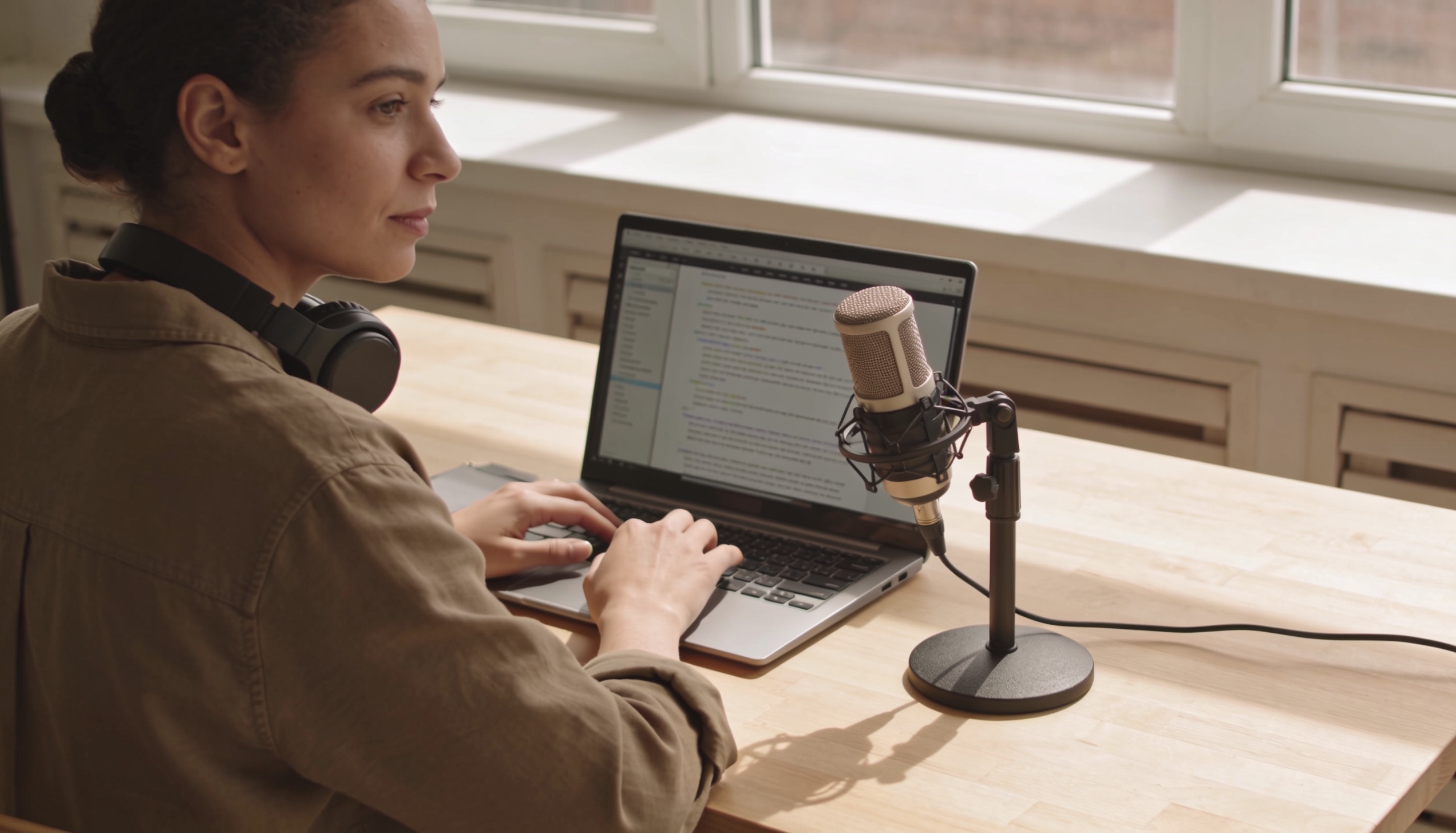
Descript is the most practical AI video editor for anyone producing talking-head or podcast video consistently. Its core workflow differs from any traditional editor: you record or upload a video, Descript transcribes it in seconds, and you edit the video by editing the text. Delete a sentence from the transcript and the corresponding video clip disappears. Move a paragraph and the video reorders accordingly.
That workflow is fast specifically for content where every cut follows a sentence boundary. A 45-minute raw interview becomes a 12-minute edit in the time it takes to read through a transcript and delete what does not belong. Filler word removal — eliminating every "um," "uh," and "like" in one click — runs on a recording of any length in under two seconds.
Descript's AI features in 2026 include Overdub voice cloning (re-record a line using your AI voice without returning on camera), AI eye contact correction (adjusts gaze to appear looking at the camera even when reading from a teleprompter), and Studio Sound which removes background noise and room echo from any recording. These address production problems that previously required either a re-shoot or a professional audio engineer.
Pricing: the free plan includes 1 hour of transcription per month, 1080p export, and a watermark on exported videos. Hobbyist at $16 per month on annual billing removes the watermark and raises transcription to 10 hours per month. Creator at $24 per month adds 4K export, 30 transcription hours, and the full Overdub and eye contact toolkit. For a weekly podcast or YouTube channel producing interview content, the Creator plan covers the full workflow. Our Descript pricing breakdown compares all four plans in detail. Visit descript.com to test the transcript-based editor before committing.
Who should not use Descript: editors working with B-roll-heavy content, multi-camera footage, or complex color grading. The timeline editor is functional but not a replacement for Premiere or DaVinci for complex visual production. Descript is built for talking-head formats, not cinematography.

CapCut — best for short-form social content
CapCut is the most widely used AI video editor by user count in 2026, and the free plan explains why. Auto-captions, background removal, beat sync, AI filters, and 4K export for videos under 10 minutes are all available without paying. For a creator producing TikTok videos, Instagram Reels, or YouTube Shorts, those free features cover the full production workflow.
The AI features that matter for short-form creators: Auto Captions generate styled subtitles with accurate word-level timing in seconds. Background Removal works on any footage without a green screen. Auto Reframe adjusts horizontal footage to 9:16 for vertical platforms automatically. The trending effects library pulls popular visual treatments from TikTok directly into the editor and updates frequently.
CapCut Pro at $7.99 per month removes usage limits on some AI tools, adds access to premium templates, and includes additional stock assets. For most individual creators, the free tier is sufficient — the case for Pro is when you rely on specific premium effects consistently or need commercial licensing on AI-generated elements.
One limitation worth noting: CapCut is made by ByteDance, TikTok's parent company. For businesses with data handling restrictions or compliance requirements, that matters. There is no enterprise version with different data handling terms. For individual US creators without those concerns, it is the most efficient free tool for short-form production. If the ByteDance connection rules CapCut out, or you have outgrown its editing depth, our CapCut alternatives guide covers replacements by use case.

Runway — best for AI-generated video content

Runway is a different type of tool from Descript and CapCut. Where those tools edit footage you shot, Runway generates video from text prompts, images, or short reference clips. Gen-4, Runway's current model in 2026, produces 4 to 16-second video clips from a text description or a reference image.
The practical use cases are specific: generating background footage for a project where you cannot film B-roll, creating motion graphics that would otherwise require a motion designer, and building visual content for social platforms where AI-generated aesthetics are accepted. For a narrator who needs a visual to accompany a voiceover and has no footage, Runway generates the visual in minutes.
What Runway is not: a tool for editing footage you already have. If you shot video and need to cut it, Runway is the wrong choice. Generation is slow by editing standards — a 4-second clip can take several minutes to render. Gen-4 output is significantly improved from 2024, but still reads as AI-generated under close inspection. Realistic human motion and specific branded environments remain difficult to produce convincingly.
Pricing: Basic free (25 credits included). Standard at $15 per month. Pro at $35 per month. Unlimited at $95 per month. Credits are consumed per second of generated video, so the math is non-obvious. At Standard tier, roughly 60 to 80 seconds of generated video per month — useful for social content but limited for sustained weekly production. For creators whose workflow mixes AI generation with avatar video, the Runway vs HeyGen comparison covers the tradeoffs directly.

Adobe Premiere Pro and DaVinci Resolve — for professional editing workflows
Professional editors already in the Adobe or Blackmagic Design ecosystem do not need to switch tools to use AI in 2026. Both Premiere Pro and DaVinci Resolve added significant AI capabilities to their existing editors over the last 18 months.
Adobe Premiere Pro with Sensei includes Auto Reframe (resizes footage for different aspect ratios automatically), Scene Edit Detection (identifies cut points in existing video), Speech to Text (captions from dialogue), and Generative Extend powered by Adobe Firefly (fills short gaps in footage without a visible cut). At $22.99 per month for the single-app subscription, this is the right choice for editors already using it — not for a creator starting fresh who needs a simpler workflow.
DaVinci Resolve adds AI through its Neural Engine: Voice Isolation removes background noise from audio tracks, Magic Mask tracks a moving subject through a scene for precise masking, Smart Reframe resizes for vertical delivery, and Speed Warp creates slow-motion from standard frame rate footage without high-speed camera hardware. The base version of DaVinci Resolve is free with most AI features included. Resolve Studio is a $295 one-time purchase — it adds the highest-end AI processing and unrestricted 4K export. Over any 12-month period, Resolve Studio costs less than a year of Premiere Pro at $22.99 per month. Visit blackmagicdesign.com for the full version comparison.
For a professional video editor, the choice comes down to ecosystem: if your team is on Adobe Creative Cloud, Premiere stays in the stack. If you want a one-time payment and no subscription, DaVinci Resolve Studio is the stronger long-term value.
| Tool | Best for | Free plan | Starting price |
|---|---|---|---|
| Descript | Talking-head, podcast editing | Yes (1 hr/mo) | $12/mo |
| CapCut | Short-form social, TikTok/Reels | Yes (full) | $7.99/mo |
| Runway | AI-generated video content | Yes (25 credits) | $15/mo |
| Premiere Pro + Sensei | Professional editing, Adobe ecosystem | No | $22.99/mo |
| DaVinci Resolve | Professional editing, one-time cost | Yes (base version) | $295 one-time (Studio) |
| HeyGen | Avatar video from a script, no filming | Yes (3 videos/mo) | $24/mo |
Avatar video tools — a different category from editors
One category that frequently appears in AI video tool lists alongside editors is avatar video — tools that generate a talking-head video from a typed script without any filming. HeyGen is the dominant tool in this space: you record 2 minutes of yourself speaking once, and HeyGen builds a reusable digital presenter. Every subsequent video is produced from a script, with no camera setup or re-recording required.
Avatar tools are not video editors. They do not cut footage, add captions to existing video, or handle any post-production workflow. They replace the filming step entirely, which is a different problem from editing footage more efficiently. For a creator whose primary constraint is not wanting to appear on camera — rather than wanting to edit footage faster — HeyGen solves the right problem where Descript, CapCut, and Runway do not.
The HeyGen vs Synthesia comparison covers the two main avatar video platforms if that is the constraint you are trying to solve.


Who should skip AI video editing tools
Do not use AI video editing tools if your production involves primarily B-roll storytelling, complex color work, or multi-camera interview setups. Descript and CapCut are optimized for simple talking-head formats. Professional editors comfortable in Premiere or DaVinci Resolve already have access to the AI features that matter — there is no reason to migrate workflows that are already running well.
Do not expect AI to fix poor source material. Runway generates convincing short clips from text, but producing a full-length video of broadcast quality from a text prompt alone is not viable in 2026. CapCut's AI filters improve already-decent footage; they do not rescue shaky, poorly lit recordings. A transcription tool cannot fix incoherent speaking — the transcript will accurately reflect what was said.
Do not pick a tool based on which has the most AI features listed on its pricing page. A creator producing weekly YouTube videos needs one workflow that fits their format. The feature count is irrelevant if the tool does not match the content type you actually produce.
Ready to try Descript?
Free plan (1 hour transcription/month). Creator at $24/month. Business at $40/user/month.
Frequently Asked Questions
Continue reading

July 2, 2026