Midjourney is the best AI image generator for most creative work in 2026. Ideogram is the only major tool that renders text in images reliably. Adobe Firefly is the safest pick for commercial use — its training data is fully licensed, which matters when images appear in advertising or branded materials.
The market has changed significantly since 2024. ChatGPT's image model improved enough to compete with dedicated tools, meaning Plus subscribers no longer need a separate image subscription. Free options through Google Gemini now generate usable images at zero cost. The result is a market where five or six tools are genuinely capable, and the right pick depends almost entirely on how you plan to use what you create.
How these tools were evaluated
We tested each tool on the same set of prompt types: photorealistic portraits, product photography, editorial illustrations, abstract compositions, and images with embedded text. For each type, we evaluated image quality (detail, coherence, aesthetic consistency), prompt adherence, text rendering accuracy, generation speed, and pricing value relative to output.
Most roundup articles measure these tools on the same axis — raw image quality — and miss that different tools win on different use cases. Midjourney produces the most aesthetically compelling output for creative work. Ideogram produces the most accurate text rendering. Adobe Firefly produces the safest output for commercial publishing. These are different products for different needs, not a ranked list where one winner takes all.
The tools in this guide are the ones that performed best for a specific, commonly needed use case and are practically accessible to US users. The table below shows where each one fits.
| Tool | Best for | Free plan | Starting price |
|---|---|---|---|
| Midjourney | Artistic and creative images | No | $10/mo |
| Adobe Firefly | Commercial and brand-safe work | Yes (25 credits/mo) | $9.99/mo |
| Ideogram | Images that include text | Yes (10 images/day) | $20/mo |
| ChatGPT | Conversational iteration | Yes (limited) | $20/mo (Plus) |
| Gemini | Free everyday generation | Yes (unlimited basic) | Free |
| FLUX | Developer and API access | Yes (open source) | Pay per image |
Midjourney — for artists and creative work
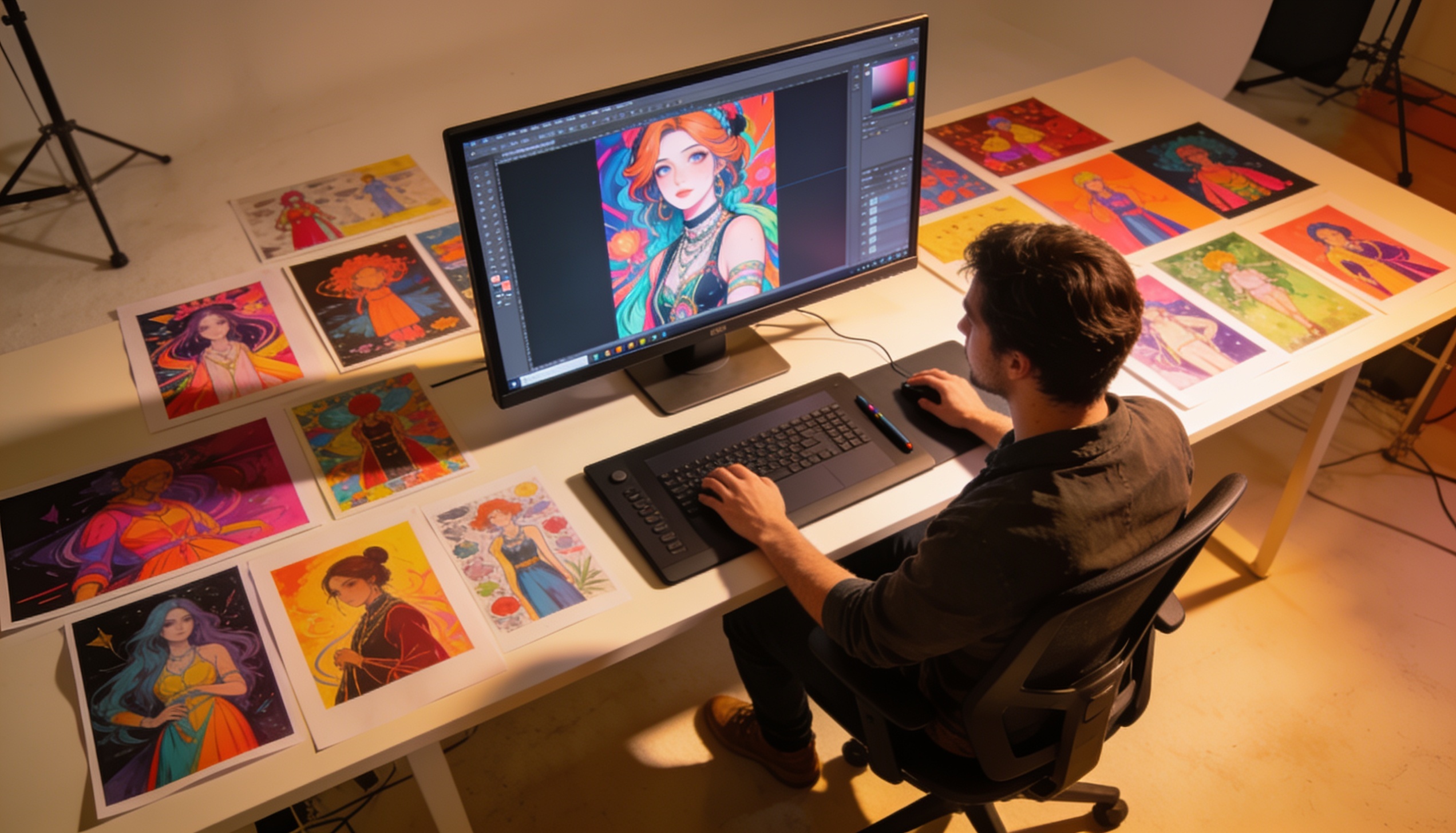
Midjourney at $10 per month (Basic plan, 200 fast image generations per month) is the strongest AI image generator for creative and artistic work. The aesthetic quality is higher than competitors on most prompt types — particularly illustrations, concept art, character design, and stylized photography. The output tends to look designed rather than generated, which matters when images represent your work publicly.
The subscription model is a friction point for new users. Midjourney removed its free trial in 2023 and has not brought it back. To generate any image, you need a paid plan. The Standard plan at $30 per month adds unlimited slow generations, which is the practical minimum for anyone generating images as a daily workflow. Access is through the web interface at midjourney.com or Discord.
Where Midjourney falls short is text in images. Ask it to render a readable word on a product label or a sign, and the output is usually garbled or stylized beyond legibility. This is a known, persistent limitation. If text in images is a requirement, Ideogram is the better pick.
The other area where Midjourney's terms create friction is commercial use. Paid subscribers can use images commercially, but the licensing does not come with the explicit indemnification that Adobe provides Firefly customers. For personal creative work, that distinction rarely matters. For brand teams publishing images in advertising, it does.

Adobe Firefly — for brand teams and commercial publishing
Adobe Firefly at $9.99 per month gives you 100 generative credits per month and access to all Firefly image models. It is slower than Midjourney and the aesthetic ceiling is lower for purely artistic work, but it has two advantages that matter in professional and commercial settings.
First, Adobe trained Firefly exclusively on licensed content and public domain images — no scraped web data. Every image you generate is commercially safe to publish. For brand teams, agencies, and businesses using AI-generated images in advertising or product materials, that distinction is load-bearing. Using Midjourney or open-source models for commercial publishing without careful review creates intellectual property exposure that Firefly eliminates by design.
Second, Firefly integrates directly into Photoshop, Illustrator, and Adobe Express. If your team already works in the Adobe suite, generative fill, background replacement, and object removal are available inside the tools you already use. The workflow cost of switching between apps drops to zero.
Firefly's weaknesses: the free tier is limited to 25 generative credits per month, which is too restrictive for regular use. The image output style leans toward stock photography rather than editorial or artistic aesthetics, and it handles abstract or heavily stylized prompts less effectively than Midjourney. For teams choosing between the two, the Midjourney vs Adobe Firefly comparison covers output quality tradeoffs alongside the licensing differences. Visit firefly.adobe.com to test the free tier before committing.

Ideogram — for images that include readable text
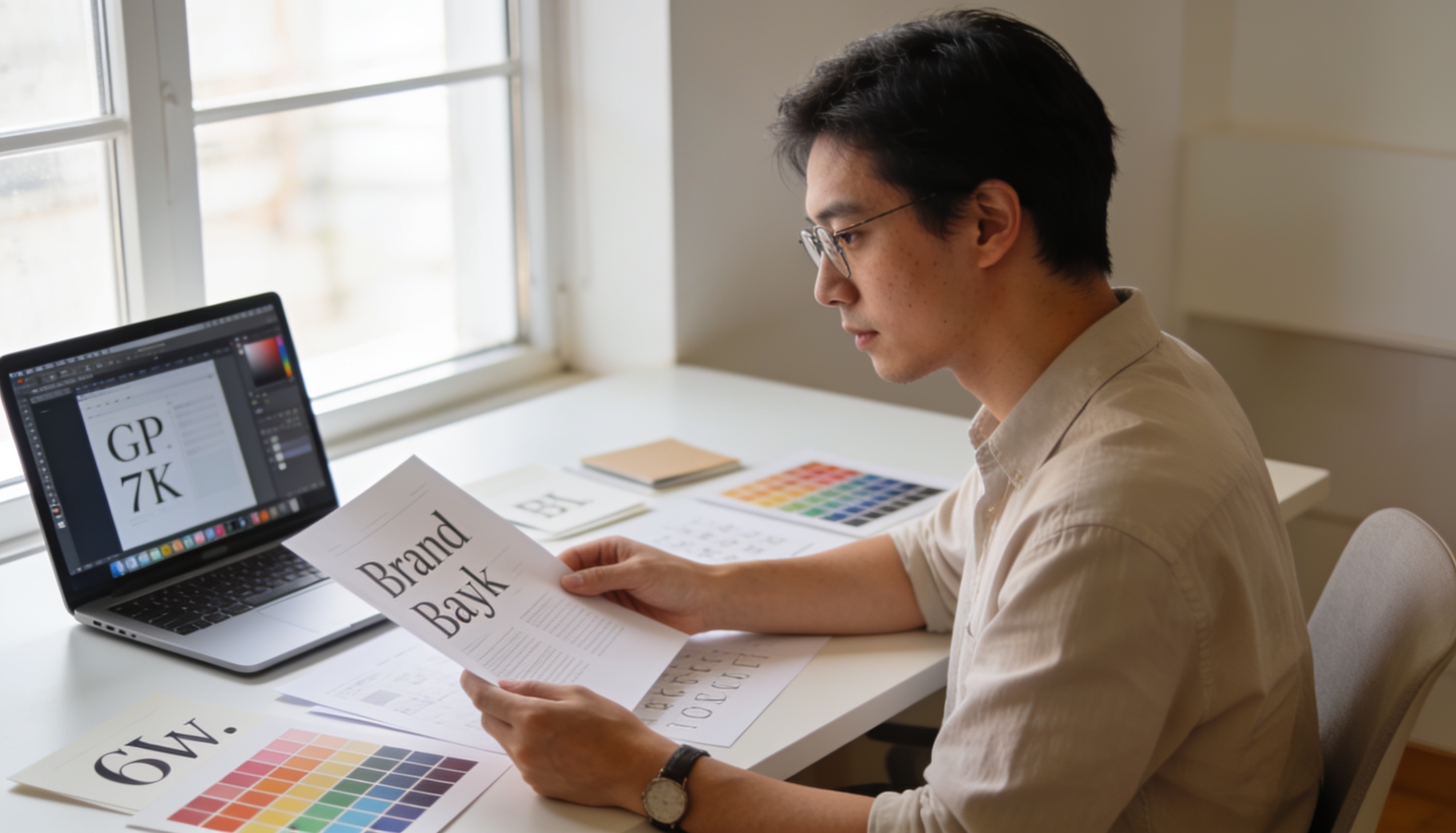
Ideogram is the only major AI image generator in 2026 that handles text in images reliably. Ask it to put a word on a coffee cup, a phrase on a billboard, or a product label on packaging — the output is legible. The same request in Midjourney, Adobe Firefly, or most other tools produces garbled characters that are immediately obvious as AI artifacts.
The free tier is 10 images per day, which is generous enough for occasional use without a subscription. The Plus plan at $20 per month increases to 4,000 slow generations per month and adds commercial usage rights. Unlike Midjourney, Ideogram does not require Discord — the web interface is clean and requires no setup beyond an account.
Where Ideogram falls behind: photorealism and stylistic range. For images without text, Midjourney and FLUX consistently outperform it on output quality and aesthetic variety. Ideogram improved significantly between 2024 and 2026, but it has not closed the gap on purely artistic image generation.
The use cases where Ideogram is the right choice are specific but common: social media graphics with overlaid text, product mockups showing labels or packaging, branded marketing materials, and educational infographics. Anyone producing these content types regularly has a genuine need that other tools do not fill. For a direct breakdown of when each tool fits, the Ideogram vs Midjourney comparison covers image quality, text rendering, and pricing across both.

ChatGPT — for subscribers who already pay for Plus
ChatGPT's image generation, powered by OpenAI's GPT Image model, improved meaningfully in 2025. For Plus subscribers at $20 per month who already use ChatGPT for writing, research, and analysis, image generation is a useful addition that costs nothing beyond an existing subscription.
The distinctive advantage is the conversational interface. You describe an image in plain language, see the result, and ask for specific changes in natural language — "make the background darker," "add a window on the left," "change the style to a line drawing" — without rewriting the full prompt from scratch. That iterative workflow is more forgiving than the precise prompt engineering that Midjourney and FLUX require, and it is well-suited to users who do not generate images often enough to develop prompt-writing skill.
The limitation is generation volume. Plus subscribers encounter rate limits on image generation before they reach the limit on dedicated tools. The Pro plan at $200 per month raises those limits substantially, but the price is difficult to justify on image generation alone.
For existing ChatGPT users, the image tool handles most tasks well and removes the need for a second subscription. For anyone whose primary creative workflow centers on image generation, a dedicated tool offers better value. The image quality on complex artistic prompts also falls below what Midjourney produces on the same input.

Gemini — the best free option
Google Gemini offers AI image generation at no cost with a standard Google account, using Google's Imagen model. The quality does not match Midjourney on artistic work, but for basic social media content, simple illustrations, or occasional use, it is genuinely usable at zero cost.
The free tier generates images without watermarks and permits commercial use under Google's standard terms of service — a meaningful advantage over free tiers from other tools that restrict commercial publishing. For users who cannot justify a paid subscription or need images occasionally rather than daily, Gemini is the practical starting point.
Gemini handles text in images better than Midjourney, though not as consistently as Ideogram. On straightforward prompts with clear subjects, the quality difference from paid tools is noticeable but not prohibitive. On complex, stylized, or highly specific prompts, the gap between Gemini and paid tools widens considerably.
One friction point: Gemini applies a conservative content policy that declines more prompt types than Midjourney or Ideogram. Dark themes, mature content, or anything adjacent to violence will be declined more often. For straightforward creative and commercial prompts, this is rarely an issue.

When AI image generators are not the right tool
AI image generators produce synthetic images. They cannot produce accurate images of specific people, real locations, or recognizable physical products. Ask any of these tools to generate a specific person's face accurately, and you will get something plausibly close but wrong in ways that are immediately obvious to anyone who knows the person. Ask for your actual office, your physical product, or a specific building — same result.
Photography is still necessary when accuracy to a real subject is the requirement. AI-generated images work well for illustrations, concept art, generic scenes, visual metaphors, and branded content that does not need to depict a specific real thing. They do not work for product photography of actual physical goods, executive headshots, event photography, or any image that needs to show something that exists.
If your use case involves specific people or products, stock photography is the better starting point for backgrounds and contexts. Then photograph the actual subject. For teams producing visual content at scale — across video, copy, and design — the best AI tools for content creators guide covers how image generation fits into a broader workflow alongside writing, video, and design tools.
Ready to try Midjourney?
No free plan. Basic at $10/month (200 images). Standard at $30/month (unlimited relaxed). Pro at $60/month (more fast hours, stealth mode).
Frequently Asked Questions
Continue reading



July 3, 2026