

Most teachers who consistently save time with AI tools are using two or three well — not a list of twenty. A writing assistant for lesson plans and communications, a design tool for presentations and worksheets, and sometimes an education-specific platform depending on your school context. That combination covers the most time-consuming parts of most teaching workloads.
This guide covers the tools saving teachers real time in 2026, organized by task. What helps with lesson planning is different from what helps with grading. Elementary teachers have different needs than high school subject specialists. The right setup depends on your actual workload — not on which tools appear in every general AI roundup.
What teachers are using AI for — and what they are not
Teachers consistently saving time with AI tools are typically automating four things: drafting lesson plans and classroom materials, producing differentiated content for students at different reading levels, writing parent communications and report card comments, and generating feedback suggestions on student writing. These are the high-volume, repetitive writing tasks that consume prep time without requiring the judgment that only the teacher can provide.
What AI does not do well for teachers: evaluating nuanced student understanding, making judgment calls about individual learning needs, managing classroom dynamics, or anything that requires knowing the specific students in front of you. AI produces first drafts. Teachers still make all the decisions about what gets used.
The tools worth knowing fall into three categories. General-purpose AI assistants — Claude, ChatGPT — handle the wide range of writing and planning tasks. Design tools — Canva AI — handle worksheet and presentation production. Education-specific platforms — MagicSchool AI, Brisk Teaching — combine multiple functions into interfaces built specifically for classroom use. Most teachers do not need tools from all three categories. Starting with one general-purpose assistant and adding a second tool only when a specific bottleneck appears covers most needs without unnecessary cost.



Lesson planning and writing — Claude and ChatGPT

Claude is the most practical starting point for lesson planning. Give it your grade level, subject, learning objectives, and state standards and it generates a detailed lesson plan with activities, discussion questions, and differentiation suggestions in a single prompt. The 200,000-token context window means your full curriculum guide, previous lesson notes, and relevant student context can sit in one conversation without the tool losing track. The free plan covers multiple lesson plans per day for most teachers without hitting daily limits.
Where Claude is particularly strong for teachers: generating the same material at multiple reading levels, drafting the written portions of IEPs and accommodation plans, producing parent email templates that stay professional without sounding generic, and writing rubrics from a brief description of the assignment. It holds complex instructions consistently — "write at a 6th-grade Lexile level, avoid idioms, use concrete examples" — across a document of any length. For a detailed look at how Claude compares to ChatGPT for writing tasks, see the Claude vs ChatGPT writing comparison.
ChatGPT handles the same planning tasks with the addition of web browsing, which matters for teachers who need current examples, recent news to anchor content to real events, or quick links to primary sources while building a lesson. The memory feature retains your class profile, grade level, and curriculum context across sessions, which removes the step of re-entering background information every time you open a new conversation. The free plan includes GPT-4o with web browsing — a more complete free offering than Claude free for teachers who rely on current information in their planning.
Who should skip the AI writing tools entirely: teachers who have existing lesson plan libraries covering their full curriculum and spend most prep time on grading rather than content creation. If the bottleneck is assessment feedback, not planning, these tools are solving the wrong problem.
| Tool | Best for | Free plan | Starting price | Standout feature |
|---|---|---|---|---|
| Claude | Lesson planning, IEP drafts, long-form writing | Yes (Claude 3.5 Sonnet) | $20/mo (Pro) | 200K context window — full curriculum in one session |
| ChatGPT | Research-backed lessons, current examples | Yes (GPT-4o) | $20/mo (Plus) | Web browsing + memory across sessions |
| MagicSchool AI | Education-specific workflows, 80+ teacher tools | Yes (limited) | Custom pricing | Pre-structured prompts built for teaching use cases |
| Canva AI | Worksheets, presentations, visual handouts | Yes | $15/mo (Pro) | Magic Design generates layouts from a text prompt |
| Grammarly | Parent emails and formal school communications | Yes (basic) | $12/mo (Premium) | In-context checking inside Gmail, Docs, and the browser |
Presentation and classroom materials — Canva AI
Canva AI is the most practical design tool for teachers producing worksheets, presentation slides, and classroom display materials without a design background. For lesson decks specifically, Gamma builds a full presentation from a topic prompt — our AI presentation tools roundup compares the two approaches. Magic Design generates complete layout templates from a text prompt — "a worksheet on the water cycle for 4th grade, clean layout, space for written responses" — and fills a template in under 30 seconds. Background Remover handles cutting subjects from photos for visual materials. Magic Resize adapts one design to different formats automatically, which is useful when a lesson activity needs to work as both a printed handout and a projected slide without rebuilding the layout.
The free plan includes most AI features with daily generation limits that most teachers will not hit on a regular working day. Canva Pro at $15/month removes limits and adds Brand Kit support — useful for schools where all teacher-produced materials should follow consistent fonts and color guidelines. For a department or grade team creating shared materials, the Teams plan at $10/seat/month costs less per person than individual Pro subscriptions.
Where Canva falls short: generating complex, subject-specific diagrams that require precise data visualization, or producing materials from existing PDFs not built in Canva. For a biology teacher needing an accurate anatomical diagram or a math teacher building a graphing exercise with specific axis values, Canva produces starting points that require manual correction. These are niche limitations — for the wide majority of classroom presentations and worksheet production, Canva AI handles it without design training.
Education-specific platforms — MagicSchool AI and Brisk Teaching
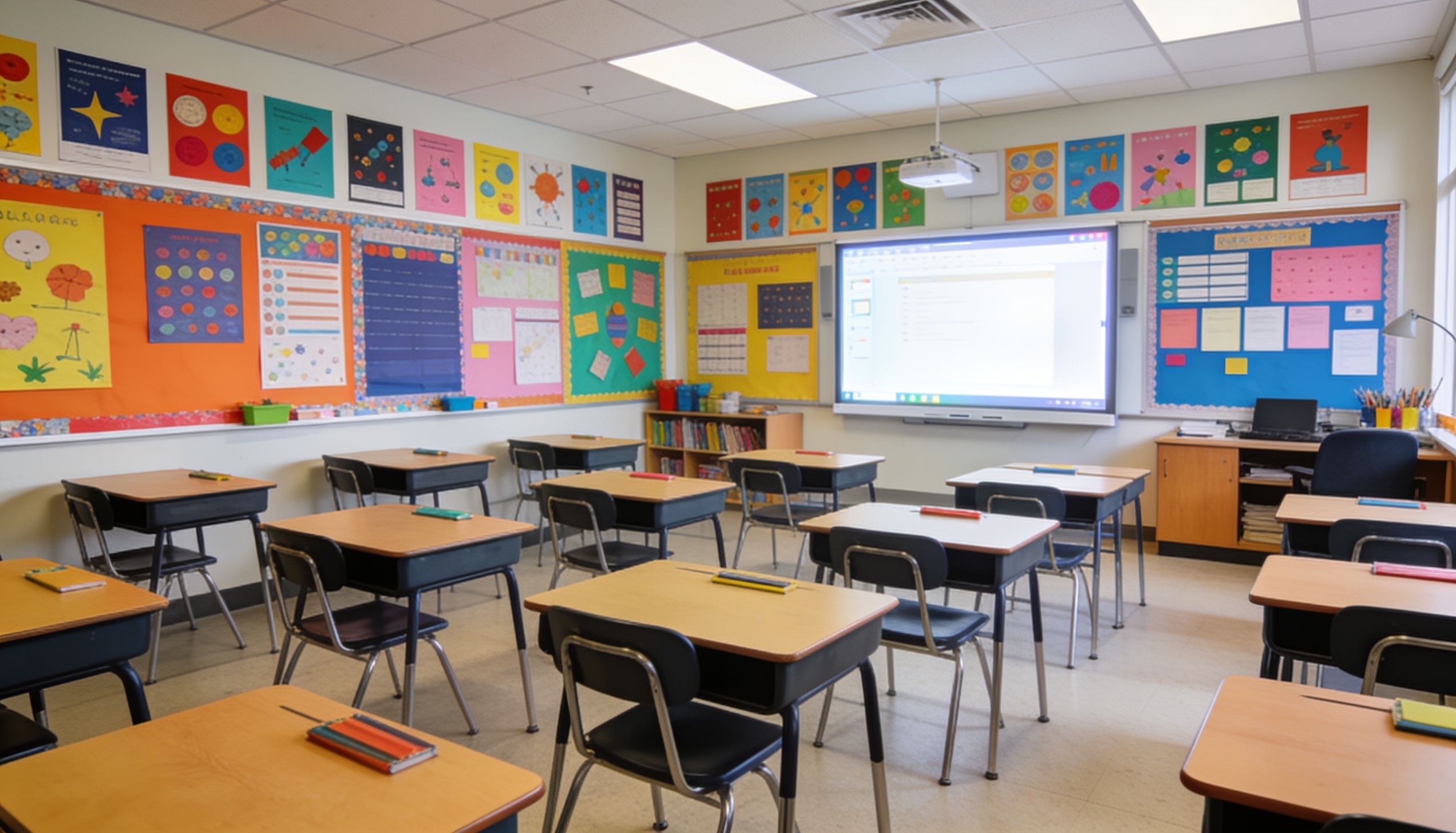
Two platforms are worth knowing for teachers who want tools built specifically for education workflows rather than general AI adapted for classroom use.
MagicSchool AI provides 80+ teacher-specific tools from one interface: differentiated reading generators, rubric builders, IEP writers, parent communication templates, exit ticket creators, and more. The workflows are pre-structured for education — you enter grade level, subject, and a brief description, and the tool fills in the prompting context that a general AI assistant would need you to specify manually each time. The free plan covers most tools for individual teachers, with school and district pricing available for team adoption.
MagicSchool AI is the better starting point than Claude or ChatGPT for teachers new to AI tools. The structured prompts remove the trial-and-error of learning how to get useful output from a general assistant. Once you know what good AI-generated lesson content looks like, the general tools give more flexibility — but MagicSchool AI gets you there faster at the start.
Brisk Teaching runs as a Chrome extension that appears as a side panel on whatever you are already viewing — a Google Doc, a PDF, a YouTube video, a student assignment. It reads the content in context and generates teacher tools from it: quizzes, discussion questions, guided notes, re-leveled content. The in-context approach is its differentiator: you are not copying text into a separate tool, you are generating resources from whatever you are already reading.
Brisk is worth adding if your workflow runs primarily through Google Workspace. It layers AI functionality on top of tools you already use, which reduces the friction of adopting a new platform. The free tier is sufficient to evaluate whether the extension fits how you actually work.
Who AI teaching tools are not for
Do not use AI lesson planning tools if your curriculum is already built and planning is not where your time goes. Teachers who have strong lesson libraries and spend most of their prep time on differentiated instruction, intervention work, or student relationship management are solving the wrong problem with a planning tool. Identify the actual bottleneck before adding a subscription.
Do not draft parent communications in AI voice and send them without editing. Parents recognize when a message does not sound like the teacher they know. AI drafts are starting points — the specific details, the appropriate tone for this family, and any personal context are still the teacher's responsibility before sending.
Do not use AI for grading decisions that require understanding a student's learning history. AI can flag patterns in student writing and suggest feedback categories, but a grade on work that a student struggled with for several weeks requires knowing that student. Use AI to generate a feedback framework, then apply the judgment.
Teachers in districts with strict data privacy policies should verify compliance before using general AI tools for documents that include student information. Most general-purpose tools — Claude, ChatGPT — process data on third-party servers. Using them for documents that include student names, IDs, or accommodation details may conflict with FERPA requirements or district policy. Check before using, particularly for IEP and 504-related content.
How many AI tools do teachers actually need?
Most teachers need two tools at most. The combination that works: one general-purpose AI assistant for writing tasks, and one tool that handles the specific high-volume bottleneck in your workflow.
If the biggest time cost is lesson planning and written materials: Claude free is the right starting point. Use the free plan for two weeks on actual planning work. If you hit daily limits consistently, the tool is saving real time — the $20/month Pro plan is then an easy decision. If the limits never arrive, the free plan covers the need.
If the biggest time cost is creating differentiated versions of the same material for different reading levels: MagicSchool AI free has a structured workflow built specifically for that task, which is faster than prompting a general assistant each time.
If the biggest time cost is classroom presentations and visual handouts: Canva AI free handles most template-based production without design training.
Do not pay for more than one subscription until a clear second bottleneck appears that the first tool cannot cover. Teachers spending more than $40/month across AI tools without saving meaningful time are typically duplicating functionality — two writing tools when one already covers lesson planning. Grammarly at $12/month adds genuine value for teachers producing high volumes of formal parent and administrative writing — the in-context checking across Gmail, Google Docs, and the browser catches errors that AI writing tools generate without flagging. For most day-to-day classroom communications, Claude free is the more capable starting point at no cost.

Ready to try Claude?
Free plan. Pro at $20/month.
Frequently Asked Questions
Continue reading




June 28, 2026